Liquid PPF vs Traditional PPF: An Honest Comparison
Two Distinct Systems. One Correct Choice for Your Vehicle.
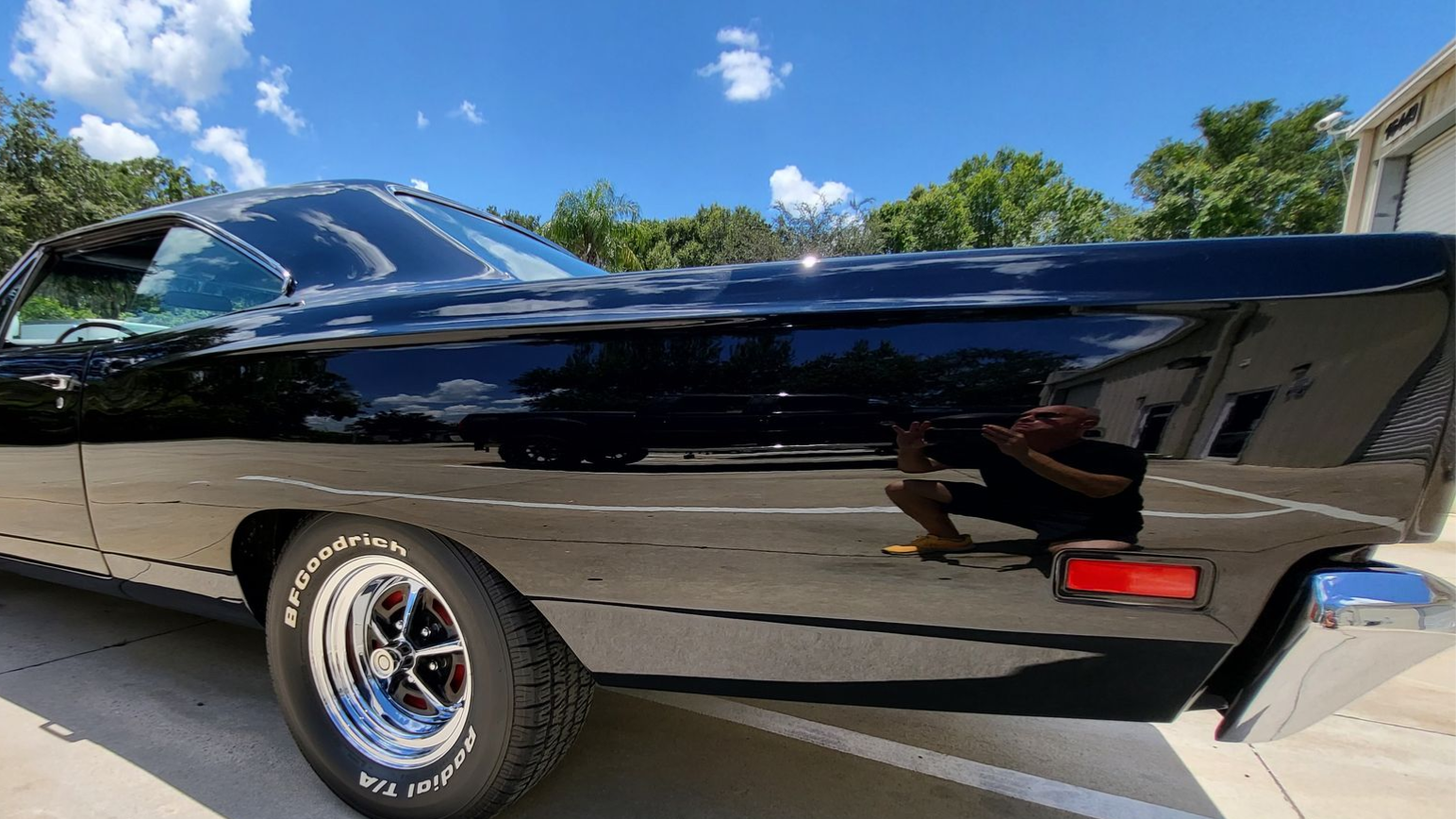
Liquid PPF and traditional paint protection film are two distinct systems designed to protect automotive paint from physical damage. They serve the same purpose. They do not function the same way. The differences are in installation method, surface coverage, long term behavior, and what happens when a vehicle requires collision repair.
I apply the NanoPro® liquid PPF system exclusively. Traditional PPF remains a valid solution in many situations. The correct decision is not which product is better in general. The correct decision is whether liquid PPF is appropriate for your vehicle. This is a direct comparison so you understand the difference.
Where Traditional PPF Has the Advantage
Traditional paint protection film provides reliable localized impact protection on flat panel areas. If the primary concern is concentrated rock chip damage on the center of a hood or the leading edge of a bumper, traditional film applied to those specific zones is a proven solution. The material is thick. Many versions are self healing. It absorbs repeated debris impact effectively when installed correctly.
Traditional PPF is also widely available and installed by experienced professionals throughout Tampa Bay. For targeted protection on limited flat areas where visible edges are acceptable, traditional film remains a legitimate system.
Where Liquid PPF Has the Advantage
Liquid PPF excels in seamless coverage and application flexibility. On complex panel geometry such as curved hood edges, recessed bumper contours, and mirror housings with compound surfaces, traditional film must be cut, stretched, and wrapped. Even when installed properly, defined seam lines exist at panel boundaries.
Liquid PPF is applied in liquid form and cures into a continuous protective film within the treated area. There are no cut lines and no panel transition seams inside that coverage zone.
For classic, collector, show, performance, and high end vehicles where uninterrupted body lines matter, this distinction is significant.
Installation time is also different. NanoPro® LPF (liquid protection film) is typically completed in approximately one and a half days once paint correction is finished. A comparable traditional PPF installation often requires closer to three days, particularly when bumper removal is necessary to conceal edges.
Liquid PPF does not require body panel removal for coverage within the treated area. This means the structural integrity of the vehicle is not disturbed.
In Pinellas County and throughout Tampa Bay, where vehicles sit in direct sun most of the year, flexibility and adhesion performance are practical considerations. A cured liquid film behaves differently under sustained heat than an adhesive backed sheet.
Collision Repair Considerations
This is rarely discussed before installation. It becomes important after an accident.
Traditional PPF and Pressure Sensitive Adhesive
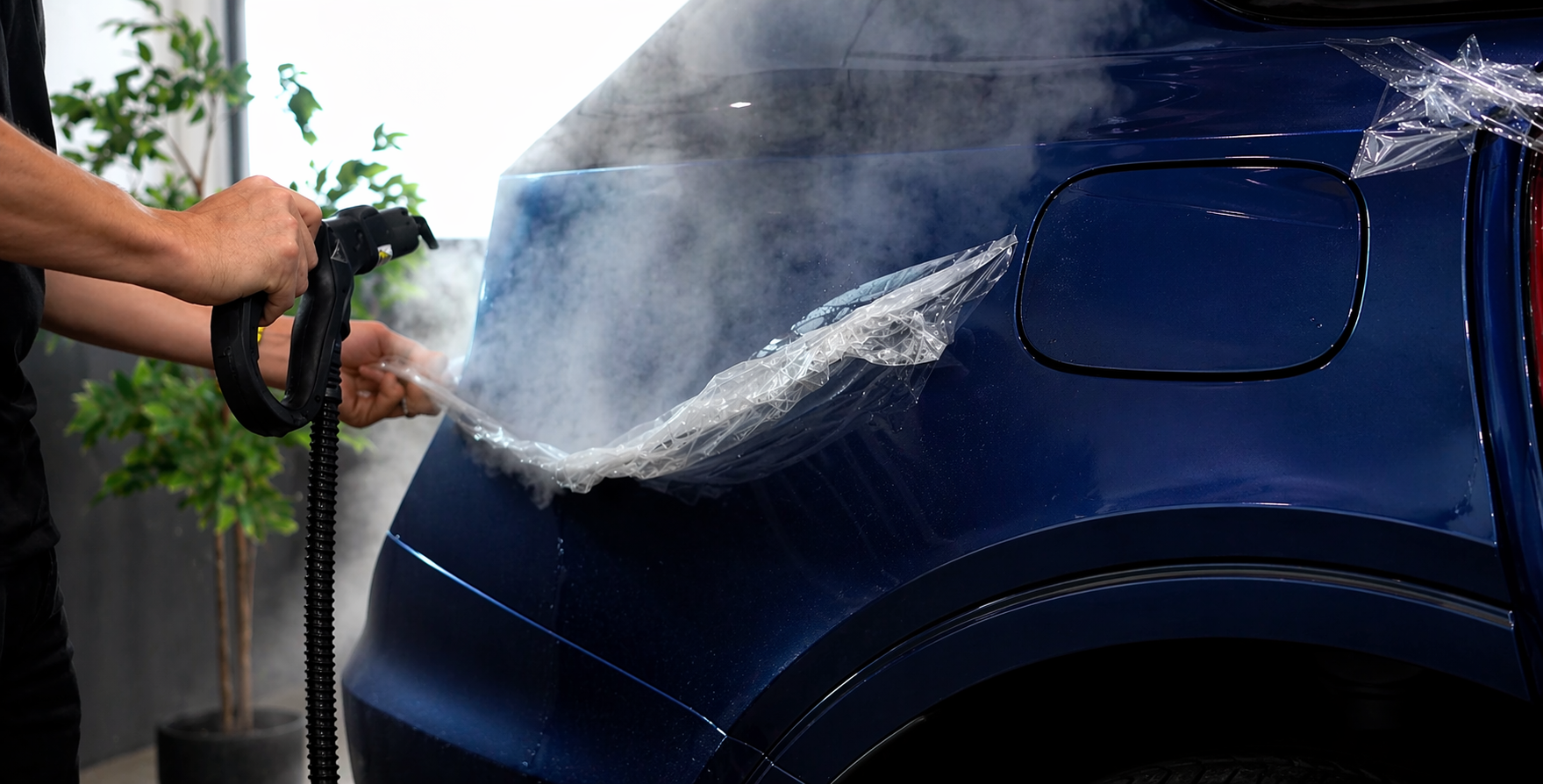
Traditional PPF relies on pressure sensitive adhesive on the backside of the film. It is designed for long term bonding. Over time, that adhesive hardens. A one year installation is generally easier to remove than a five year installation. As the film ages, removal prior to repainting becomes more labor intensive.
Removal may involve controlled heat application, mechanical lifting, and solvent treatment such as Xylene to break down adhesive residue. Even after solvent treatment, remaining adhesive can require additional surface cleaning before body work begins.
This increases labor time before repair work can proceed. Vehicle owners with traditional PPF should confirm how removal labor is handled under their insurance coverage before a claim is ever required.
How Liquid PPF Differs
NanoPro® LPF does not use pressure sensitive adhesive. It bonds through a curing process rather than adhesive tape chemistry. Removal prior to repainting is generally more straightforward and does not involve hardened adhesive breakdown. This reduces preparation time before refinishing.
The NanoPro® Permanent Status System
The liquid PPF system I apply is not a single layer product. It is a structured three stage protection system designed to function together.
Step one: NanoPro® LPF is applied to the corrected paint surface in liquid form. This forms the foundational protection layer and begins curing into a flexible film.
Step two: NanoPro® Enhancement Leveler is applied over the LPF. This layer smooths and perfects the film structure while accelerating the cure into a solid state protective layer.
Once the LPF has fully cured, NanoPro® Borograph ceramic coating is applied over the surface.
This final step:
- Protects the LPF from environmental exposure
- Increases resistance to staining and contamination
- Activates the ten year manufacturer warranty
- Registers the installation with CARFAX
NanoPro® designates this complete three stage application as Permanent Status. The performance of the system depends on all layers functioning together.
For a detailed explanation of how liquid paint protection film works, read:
What Is Liquid PPF and How Does It Work?
Side by Side Comparison
| Feature | Liquid PPF | Traditional PPF |
|---|---|---|
| Seam LInes | No panel transition seams within the treated area. The film cures as one continuous surface. | Visible edges at panel boundaries where the film begins and ends. |
| Complex Geometry Coverage | Applied in liquid form, allowing full conformity to curves, recesses, and tight body lines. | Requires cutting, stretching, and wrapping. Coverage depends on template fit and installer precision. |
| Installation Time | Approximately one and a half days after proper paint correction and preparation. | Typically three days for comparable full front coverage, depending on vehicle complexity. |
| Body Panel Removal | No bumper or panel removal required for uniform coverage. | Bumper removal is often necessary when edge concealment is required. |
| Bonding Method | Chemically cures into a solid state protective film. | Bonds using a pressure sensitive adhesive layer. |
| Post Collision Removal | In most cases, removes cleanly prior to refinishing with less residual material. | May require heat, adhesive removers, and additional surface preparation before repainting. |
| Warranty | NanoPro® LPF combined with Borgraph ceramic qualifies for a ten year manufacturer backed warranty. | Warranty structure varies by manufacturer, product line, and installer. |
Which System Is Right for Your Vehicle
Traditional PPF remains appropriate for daily driven vehicles where focused protection on flat panels is sufficient and visible seam lines are acceptable. Liquid PPF is appropriate for vehicles where seamless coverage and uninterrupted body lines are priorities.
I apply the NanoPro liquid system exclusively. The evaluation I perform determines whether liquid PPF is suitable for your vehicle’s paint condition and long term preservation goals. If it is not appropriate, I will tell you directly.
Frequently Asked Questions
Is liquid PPF better than traditional PPF?
Neither system is universally better. Traditional PPF is proven for localized rock chip protection. Liquid PPF is the correct solution when seamless coverage and uninterrupted body lines are the priority.
Why can traditional PPF increase body shop labor after a collision?
Traditional PPF uses pressure sensitive adhesive that hardens over time. Removal before repainting may require heat and solvent treatment, increasing preparation time before repair work can begin.
How long does traditional PPF last compared to liquid PPF?
NanoPro LPF carries a ten year manufacturer warranty when combined with Borograph ceramic coating. Traditional PPF warranty terms vary by manufacturer and installer. Longevity for both depends on installation quality, environment, and maintenance.
Does liquid PPF require paint correction before application?
Yes. Paint correction is required prior to installation to ensure proper adhesion and preserve visual clarity. Any imperfection present at the time of application becomes sealed beneath the cured film.
Evaluation and Appointment
I apply NanoPro LPF throughout Pinellas County and the Tampa Bay area. All work is performed at your location by appointment after the vehicle has been evaluated. Paint condition, body lines, panel shape, and long-term protection goals are reviewed before any work is scheduled.
NanoPro LPF is not right for every vehicle. Fresh paint, custom bodywork, restomods, and high-value vehicles usually benefit the most. Each vehicle is evaluated individually to determine whether liquid paint protection film is the right choice.
If you want a direct answer about whether NanoPro LPF is right for your vehicle, call to schedule an evaluation.
Call 727-823-2500 | mobileceramictampa.com | Mobile service throughout Pinellas County and Tampa Bay
Share
GET STARTED
Your Vehicle
Your Location
My Standards
Paint correction. NanoPro LPF. NanoPro Borograph ceramic coating.
Steve Calafato | NanoPro Certified Expert | Pinellas County & Tampa Bay
TAP TO CALL | BY APPOINTMENT