The Real Cost of Conventional PPF Removal After a Collision
Most vehicle owners choose paint protection for what it prevents. Few consider what happens when a collision forces it to come off.
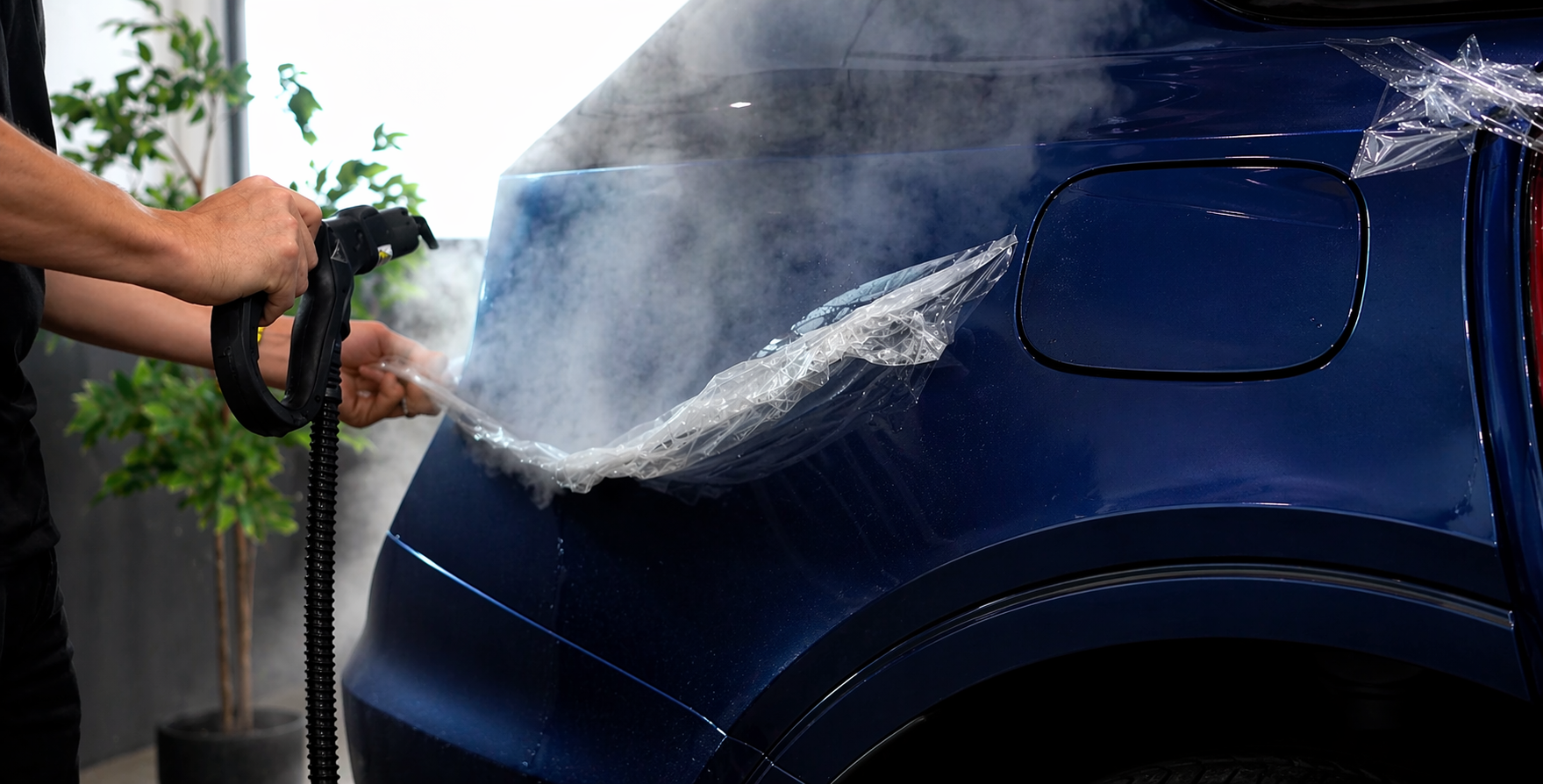
If you have conventional paint protection film on your vehicle and you are ever in a collision that requires body repair, there is a conversation you will have at the body shop that most PPF installers never mention before you sign the contract.
It starts with how long it is going to take to remove the film before the repaint can begin. It ends with a number that surprises most people.
I apply NanoPro LPF Accelerate, which is liquid PPF, not conventional film. I want to explain exactly what happens when conventional PPF has to come off after a collision, why it happens, and how liquid PPF handles the same situation differently. This is practitioner knowledge. I have seen this firsthand.
What PSA Is and Why It Becomes a Problem
Conventional PPF has a pressure-sensitive adhesive on the backside. PSA is what makes the film stick to your paint. It is engineered for one purpose: permanent, never-to-be-removed bonding. The assumption when conventional PPF is installed is that it will stay on the vehicle indefinitely. Long-term adhesion is the goal. That assumption holds right up until your car gets hit.
PSA does not stay flexible as it ages. It hardens. A conventional PPF installation that is one year old is easier to remove than one that is five years old. A five-year installation is easier than an eight-year installation. The longer the film has been on the vehicle, the more the PSA morphs toward what I can only describe as a concrete-like hardness. It was designed to never let go. In a collision repair scenario, that is a significant problem.
"Think of removing an old bumper sticker off a car bumper. It’s not too fun 8 years later. " - Steve Calafato
The Removal Process
When a collision requires repainting a panel covered by conventional PPF, the film has to come off before any body work begins. The process looks like this:
- Lifting the film at an edge to begin separation
- Pulling the film across the panel surface
- Twisting sections to break adhesive contact
- Heating the film with a heat gun to soften the PSA
- Chemical treatment with Xylene, a solvent adhesive remover, to dissolve adhesive residue
Sometimes one of these approaches is enough. Often, all five are needed in combination. The sequence depends on how long the film has been on the vehicle and how hard the PSA has become.
Even after Xylene has been applied and the film is off, the work is not finished. Heavy, spotty adhesive residue remains on the paint surface. That residue then requires additional rubbing and polishing to remove without damaging the paint underneath it. The body shop is cleaning adhesive off your paint before they have addressed a single dent or scratch from the actual collision.
What This Costs at the Body Shop
Up to three body shop employees may need to work on conventional PPF removal simultaneously. One pulling the film. One spraying adhesive remover. One cleaning the residue from the paint surface. These are skilled technicians being redirected from other jobs throughout the shop. That is not one labor hour. That is three, working in parallel, on a job that produces no revenue for the shop and no repair progress for the owner.
The cost to remove conventional PPF after a collision can reach $1,000. I have heard this directly from body shops. It is not a theoretical number.
Insurance may cover it. But it is categorized as a separate, individual, labor-intensive job, not an automatic inclusion in the collision repair estimate. Whether your policy covers it depends on how your coverage is written and how the shop codes the labor.
My recommendation: if you currently have conventional PPF on your vehicle, contact your insurance company now and ask specifically how conventional PPF removal before a collision repair is handled under your policy. Find out before you need to.
How the Body Shop Feels About It
I am going to be direct about this because it is relevant information for any vehicle owner with conventional PPF.
Body shops dislike conventional PPF after accidents. I have heard this enough times from enough shops to state it plainly. The film adds substantial labor time before any actual repair work can begin. It delays the repair timeline for the owner. It creates a job that nobody in the shop is enthusiastic about.
This is not a criticism of conventional PPF as a protection product. It performs its protection function well. It is a specific problem that emerges in one scenario: when a collision forces it to come off on an aged installation.
How NanoPro LPF Handles the Same Situation
NanoPro LPF Accelerate does not use PSA. It bonds to the paint through a curing process, not adhesive tape chemistry. There is no pressure-sensitive adhesive on the backside aging toward concrete hardness over time.
When a body shop needs to remove liquid PPF before repainting a damaged panel, the process is significantly more straightforward. No Xylene battle. No three-person removal team. No hour-long adhesive residue cleanup before the actual repair can start.
Body shops find liquid PPF removal cleaner and faster. The repair timeline is shorter. The additional cost before repair begins is lower. The owner gets their vehicle back sooner.
That difference is not a selling point I invented. It is what body shops tell me directly about their experience with both products.
Frequently Asked Questions About Conventional PPF Removal After an Accident
How much does it cost to remove conventional PPF after a collision?
Conventional PPF removal at a body shop after a collision can cost up to $1,000. The cost depends on the age of the installation, how hard the PSA adhesive has become, the size of the panels being repaired, and how much adhesive residue remains after the film is removed. Insurance may cover it but it is categorized as a separate labor-intensive job, not an automatic inclusion in the collision repair estimate.
Why is conventional PPF so difficult to remove after an accident?
Conventional PPF uses a pressure-sensitive adhesive on the backside that hardens over time. A one-year installation is easier to remove than a five-year installation. As the PSA ages it approaches a concrete-like hardness. Removal requires a combination of pulling, heating with a heat gun, and chemical treatment with Xylene solvent. Even after the film is off, adhesive residue remains on the paint and requires additional cleaning before any bodywork can begin.
Does insurance cover conventional PPF removal after a collision?
It depends on your policy and how the body shop codes the labor. Insurance may cover it, but conventional PPF removal is categorized as a separate, individual, labor-intensive job rather than an automatic inclusion in the collision repair estimate. I recommend contacting your insurance company directly before you ever need to use this coverage and asking specifically how conventional PPF removal before a collision repair is handled under your policy.
Is liquid PPF easier to remove at the body shop than conventional PPF?
Yes, significantly. NanoPro LPF Accelerate does not use pressure-sensitive adhesive. It bonds through a curing process, not adhesive tape chemistry. Body shops find it considerably easier to remove before repainting a damaged panel compared to conventional PPF. The removal process is more straightforward, the timeline is shorter, and the additional cost before repair begins is lower.
Should I tell my body shop I have conventional PPF before bringing my vehicle in for a collision repair?
Yes. Let them know before the estimate is written. It affects the labor time, the repair timeline, and potentially the total cost of the repair. Knowing in advance allows the shop to account for it correctly in the estimate and plan the repair sequence properly.
A Conversation Worth Having Before You Need It
If your vehicle has conventional PPF and you have not yet spoken with your insurance company about how a collision repair scenario is handled, that is a conversation worth having now. Before an accident, an estimate or a surprise at the body shop.
If you are considering paint protection for a vehicle and you want to understand how liquid PPF handles this situation differently, call me. I will explain the process, the product, and what the real-world difference looks like in a body shop context.
Call 727-823-2500 | mobileceramictampa.com/contact | Professional ceramic coating service throughout Pinellas County and Tampa Bay | All services performed at your home garage.
Share
GET STARTED
Your Vehicle
Your Location
My Standards
Paint correction. NanoPro LPF. NanoPro Borograph ceramic coating.
Steve Calafato | NanoPro Certified Expert | Pinellas County & Tampa Bay
TAP TO CALL | BY APPOINTMENT