NANOPRO® LPF CERTIFIED |
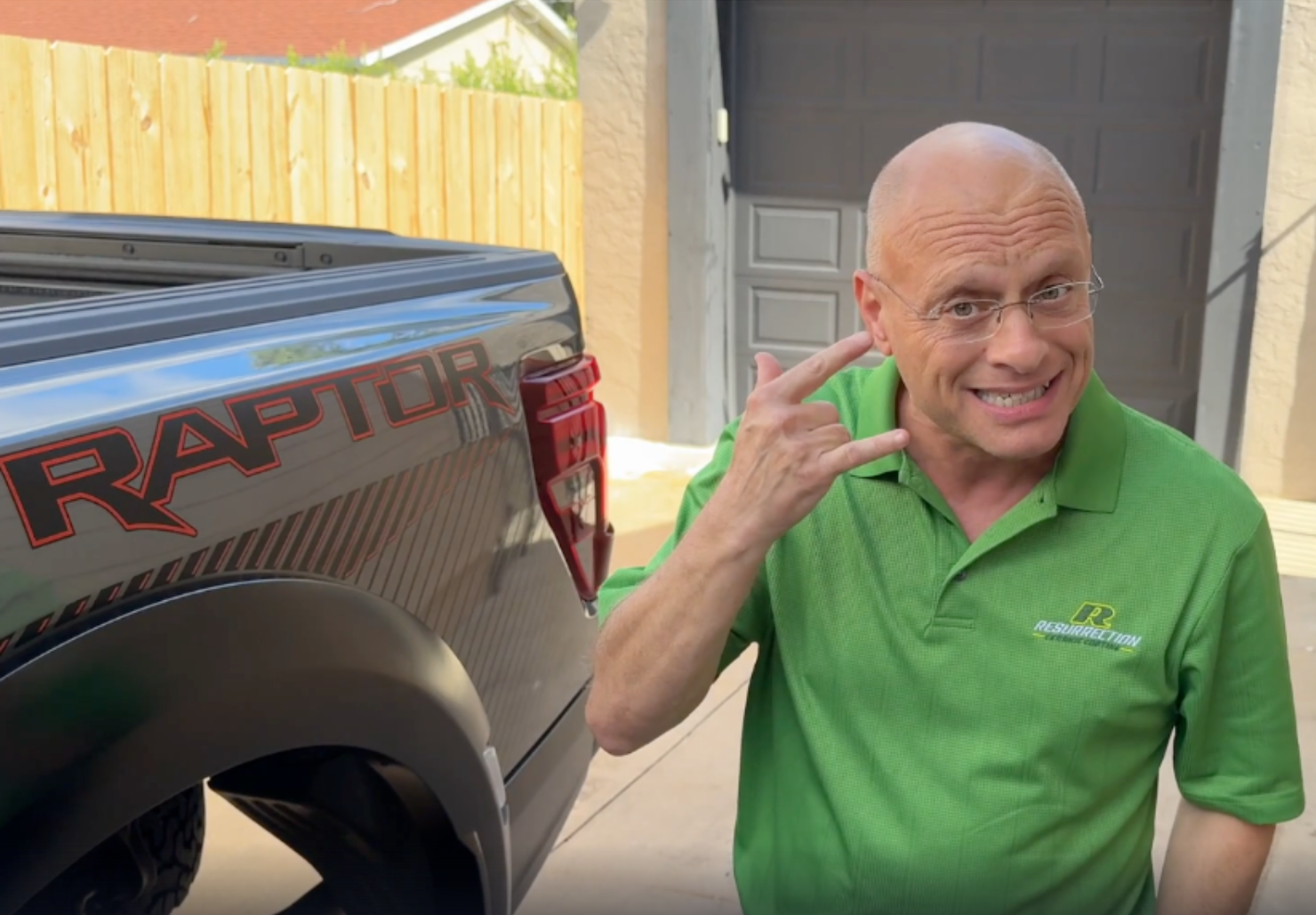
STEVE CALAFATO | PINELLAS COUNTY AND TAMPA BAY
Liquid Paint Protection Film Tampa Bay
No Seams
No Cut Lines
No Panel Gaps
Two-step paint correction first. NanoPro LPF applied in liquid form. Cures into a solid-state film that follows every body line. Service performed at your location.
NanoPro Certified Expert | No Seams or Cut Lines | 10-Year Manufacturer Warranty | Made in Florida | Service Performed at Your Location
WHY LIQUID PPF EXISTS
What Is Liquid Paint Protection Film?
Liquid paint protection film is a transparent protective film applied in liquid form that cures directly on the paint surface. Unlike traditional paint protection film, it has no cut lines, no panel transition seams, and no visible film edges within the treated area. NanoPro LPF is applied after mandatory
paint correction and becomes the foundational layer in the NanoPro Permanent Status system.
Traditional PPF protects with pre-cut sheets and pressure-sensitive adhesive. NanoPro LPF protects by curing into a continuous film directly on the paint. The purpose is the same. The installation method, appearance, and long-term behavior are different.
Liquid PPF, Liquid Paint Protection Film, LPF, and LPPF all refer to the same category of protection. I apply NanoPro LPF, a professional-grade system that cures directly on the paint with no cut lines, no panel transition seams, and no visible film edges within the treated area. That difference matters most on classic, collector, restomod, performance, and high-end vehicles where uninterrupted body lines matter.
You may also hear this category described as “sprayable PPF.” That term is often used broadly and can refer to lower-grade products that do not perform the same way.
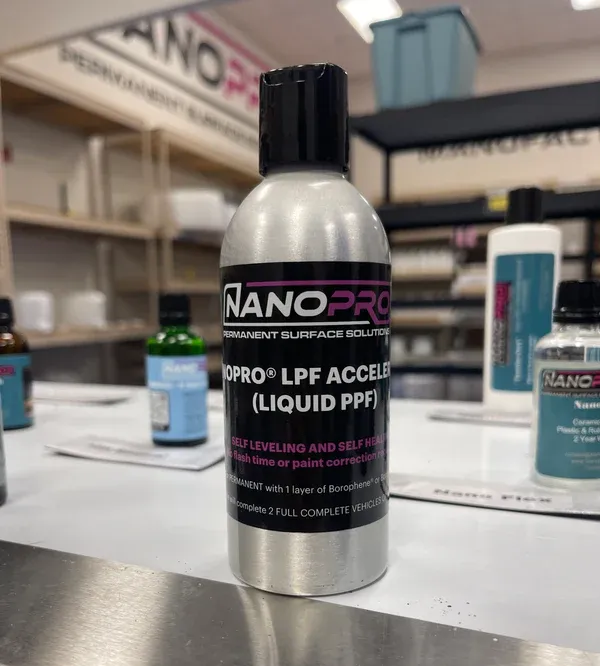
The NanoPro LPF system I use is manufactured in Boynton Beach, Florida and designed for the heat, humidity, UV exposure, and salt air that vehicles face throughout Tampa Bay. It is not sold at retail and requires a NanoPro Certified Expert for proper installation.
WHY NANOPRO LPF IS DIFFERENT
Why I Chose NanoPro LPF for Florida Conditions
I did not pick NanoPro because it had the best marketing. I chose it because I tested it in Florida conditions. Direct UV exposure, humidity do things to protective products that cooler climates do not. Direct sun, humidity, heat, salt air, and daily temperature swings expose weaknesses quickly. NanoPro LPF performed where other products did not.
It is manufactured in Boynton Beach and designed for the conditions vehicles face throughout Florida. NanoPro engineered this product specifically for Florida's merciless sun.
Chemically, NanoPro LPF is a polyurethane and acrylic blend. Conventional PPF is polyurethane only. The acrylic component gives higher tensile strength and impact resistance. That difference is not a marketing claim. It is chemistry. On a vehicle sitting outside in Florida sun year round, that difference in durability is real.
There is no plotter involved. No cutting table. No pre-cut panels that have to be positioned, aligned, and pressed into place. No trim removal. No bumper pulls. No disassembly. The liquid goes on the prepped surface and is worked across the panel. On a properly prepared vehicle, standard high-impact area coverage takes 3 hours depending on the size, condition, and needs of the vehicle. The film works with the shape of the car. I am not wrapping a stiff sheet of film around compound curves and edges.
- Composition: Polyurethane and acrylic blend
- Application: Liquid form, self-leveling, cures to solid-state film
- Application time: Three hours to prepped high-impact areas
- Seams: None. No cut lines. No panel edges.
- Standard coverage: Hood, front bumper, both front fenders
- Full vehicle application: Available
- Manufactured: Boynton Beach, Florida. Made in the USA.
- Installer requirement: NanoPro Certified Expert
- Warranty: 10-year manufacturer warranty when NanoPro LPF is combined with NanoPro Borograph. The complete system qualifies for Permanent Status and CARFAX registration.
THE PROCESS
How NanoPro LPF Is Applied
Liquid PPF is not forgiving of shortcuts. Whatever is in the paint surface when the film goes on will remain there after it cures. That means every step before the product touches the vehicle matters just as much as the application itself. Here is exactly what the process looks like when I perform this work.
Paint Assessment
Before any work begins, I measure paint thickness across the panels and evaluate the condition of the clear coat. I look at the paint system, the vehicle’s history, and any signs of previous repair or damage.
My goal is to identify anything that could compromise the film or require correction before installation.
Not every vehicle, and not every paint condition, qualifies for liquid PPF. If yours does not, I will tell you directly.
Paint Correction
Paint Correction and machine polishing come first. Every time. No exceptions.
NanoPro LPF is transparent and cures directly over the existing finish.
Any swirl marks, oxidation, scratches, or haze left in the paint will remain visible after the film cures.
Every vehicle is corrected, polished, and inspected before LPF is applied. That is not an add-on. It is part of the installation.
Surface Decontamination
After correction, the surface is chemically decontaminated and fully panel wiped.
Polish residue, oils, or contamination left behind can interfere with how the film bonds and how it levels during application.
This step is critical and it does not get rushed. A contaminated surface produces a compromised film.
Application
Once the surface is fully prepared, I apply the NanoPro LPF system to the panel and work it across the paint. The product is applied in liquid form and self-levels as it spreads.
Standard high-impact areas typically includes the hood, front bumper, and both front fenders.
Full vehicle coverage follows the same process across every panel. The film conforms to the vehicle naturally. There is no wrapping material around curves, no trimming, and no seam lines.
Cure and Inspection
The film cures directly on the vehicle. After curing, every panel is inspected for uniformity, adhesion, and finish quality.
Once NanoPro LPF has fully cured, then NanoPro Borograph is applied complete the process. That sequence qualifies the installation for NanoPro Permanent Status and CARFAX registration.
The process of proper paint correction can take seven to nine hours depending on the condition of the paint. Vehicles are corrected carefully, not rushed through a production schedule.
HOW THE OPTIONS COMPARE
Liquid PPF vs Ceramic Coating vs Traditional PPF
I get asked about this comparison regularly and I give the same answer every time: the right choice depends on the vehicle, what the owner is trying to protect, and how that vehicle is used. Here is an honest breakdown of all three options.
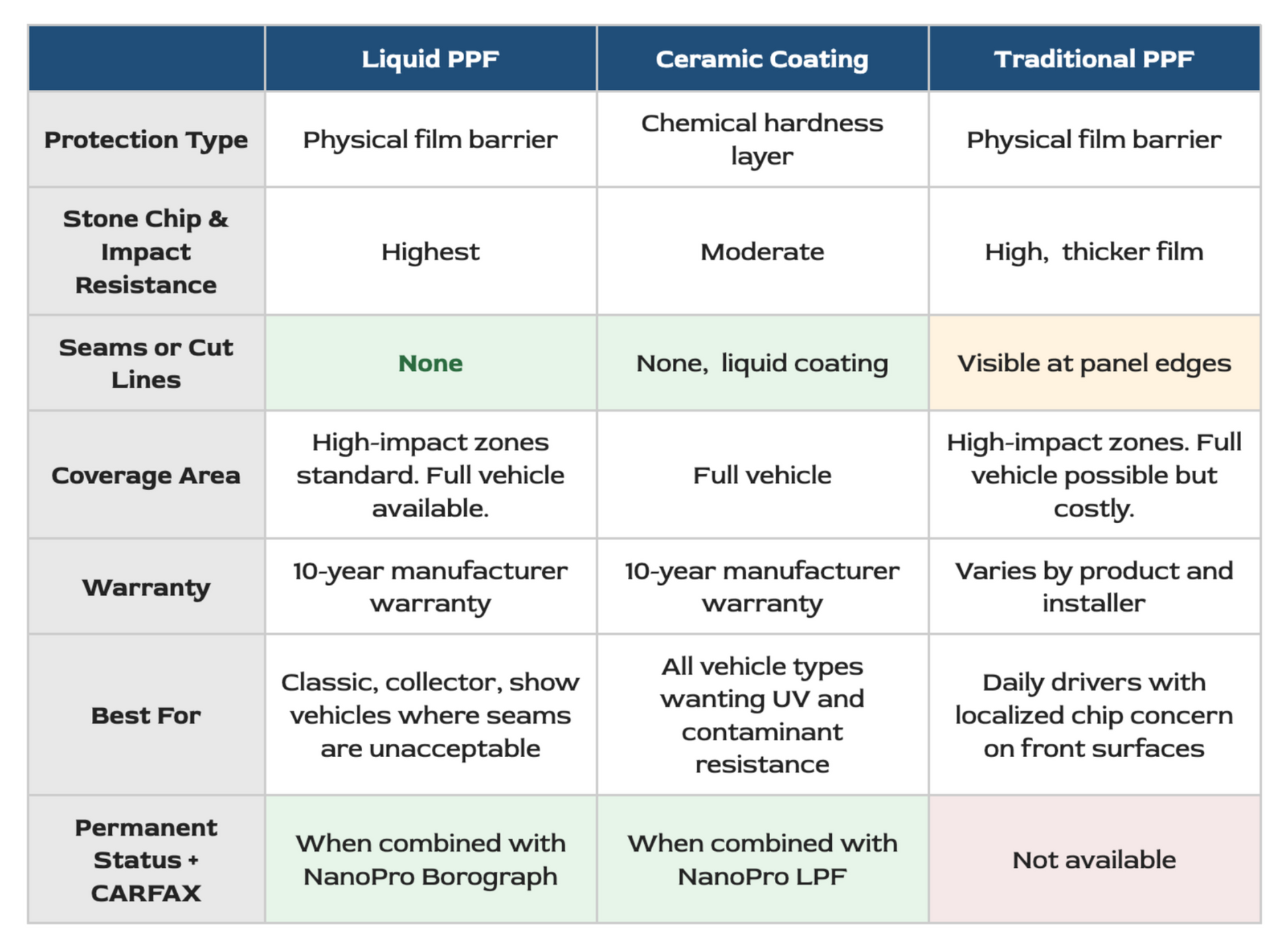
Traditional paint protection film and NanoPro LPF are designed to solve the same problem: protecting paint from physical damage. The difference is how they do it.
Traditional PPF uses a thick adhesive-backed sheet applied to selected areas. It is effective for concentrated protection on flat panels where visible edges are acceptable. NanoPro LPF is applied in liquid form and cures into a continuous film across the treated area. There are no cut lines, no panel transition seams, and no need to remove bumpers or trim to hide film edges.
For classic, collector, performance, restomods, and high-end vehicles where uninterrupted body lines matter, NanoPro LPF is often the better solution.
HONEST ASSESSMENT
Why Not Every Vehicle is a Candidate for Liquid PPF
Before any liquid PPF application I tell the owner directly whether their vehicle qualifies. If it does not, I explain exactly why and what needs to happen first, or what the right service actually is. Since I'm a straight shooter, I would rather lose the job than put film on a vehicle it does not belong on. That is simply how I approach this work.
Paint Conditions That Disqualify a Vehicle
Active rust anywhere on the vehicle disqualifies it for liquid PPF. The film bonds to paint. It does not stop rust from progressing underneath it. It will lift over the affected area as the rust continues. I will not apply film over rust. Heavy oxidation and numerous paint chips also disqualifies a vehicle.
Damage that requires filler or respray needs to be resolved before liquid PPF is on the table. The film will not bond correctly over improperly finished filler and it will not hide structural damage. If you can see it before the film goes on, you will see it after.
Peeling or failing clear coat disqualifies the vehicle until the clear coat issue is addressed. Liquid PPF applied over failing clear coat will peel with it. I have seen this happen on vehicles that other people applied product to without checking the clear coat condition first. That is not a conversation any owner wants to have six months after the application.
Traditional PPF vs. NanoPro LPF
Traditional paint protection film protects the entire front end of a car from stone chips. These high-impact areas are protected, but a visible PPF film line remains. NanoPro LPF becomes the better choice when seamless coverage, uninterrupted body lines, and no panel transition seams matter more than using pre-cut film sections.
What Liquid PPF Cannot Do
Liquid PPF does not correct paint. It protects paint that has already been corrected. If the surface underneath the film has swirl marks, spider webbing, oxidation, or defects, the film seals those in permanently. There is no fixing it afterward without removing the film, correcting the paint, and reapplying. That is an expensive mistake. Correction comes first. The film goes on after.
THE COMPLETE SYSTEM
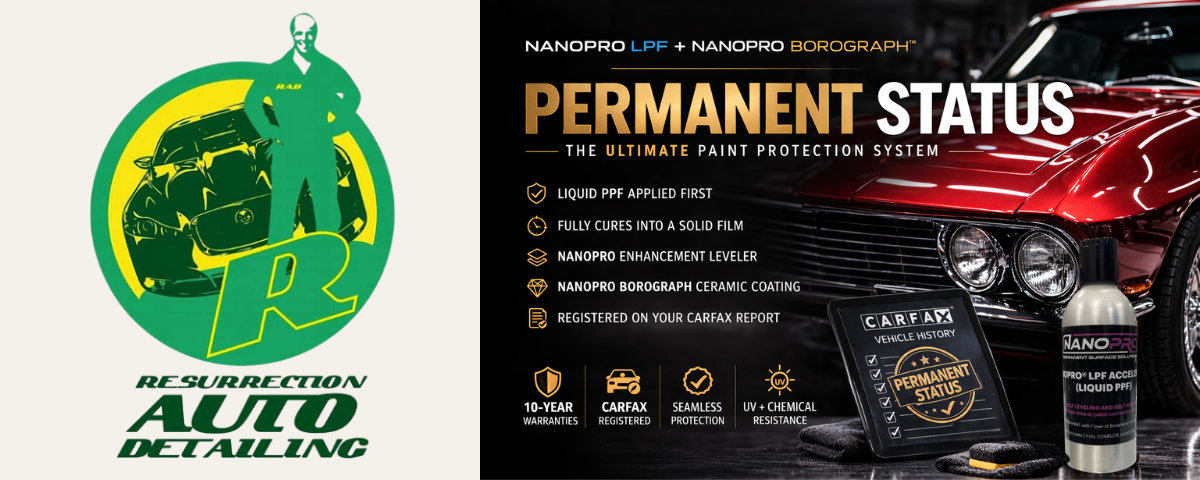
Permanent Status Paint Protection System
When I apply NanoPro Borograph ceramic coating over properly cured NanoPro LPF, the installation qualifies for Permanent Status under the NanoPro system. The sequence is specific. LPF goes on first and fully cures. NanoPro Enhancement Leveler is applied over the cured film. NanoPro Borograph goes on over the entire vehicle. That sequence does not change and cannot be altered.
The completed installation is registered on the vehicle CARFAX report as part of its permanent history. The record shows the work performed, the products used, the installer, and the date. It stays with the vehicle. For a classic or collector vehicle, that documentation is part of what the paint protection is worth. A buyer looking at that vehicle years from now sees what was done and who did it.
- NanoPro LPF + NanoPro Borograph = Permanent Status
- CARFAX registration of work and products used
- Both products carry independent 10-year manufacturer warranties
- NanoPro Certified Expert application required
CLASSIC AND COLLECTOR VEHICLES
Liquid PPF for Classic Cars and Collector Vehicles
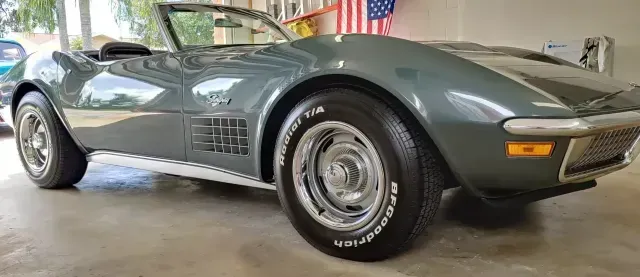
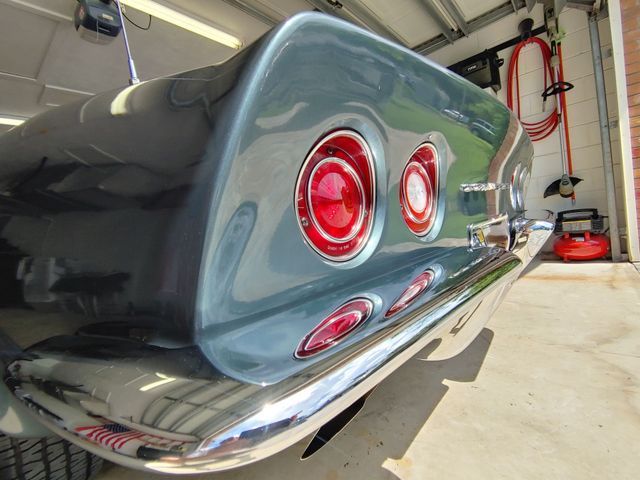
Conventional PPF has never been a clean answer for a classic. The film protects the paint but it leaves visual seam lines. On a daily driver that is a trade-off most owners accept. On a vehicle where original paint has been preserved for forty or fifty years, a visible film edge running across the hood is not a trade-off. It is damage to the appearance the owner spent years protecting.
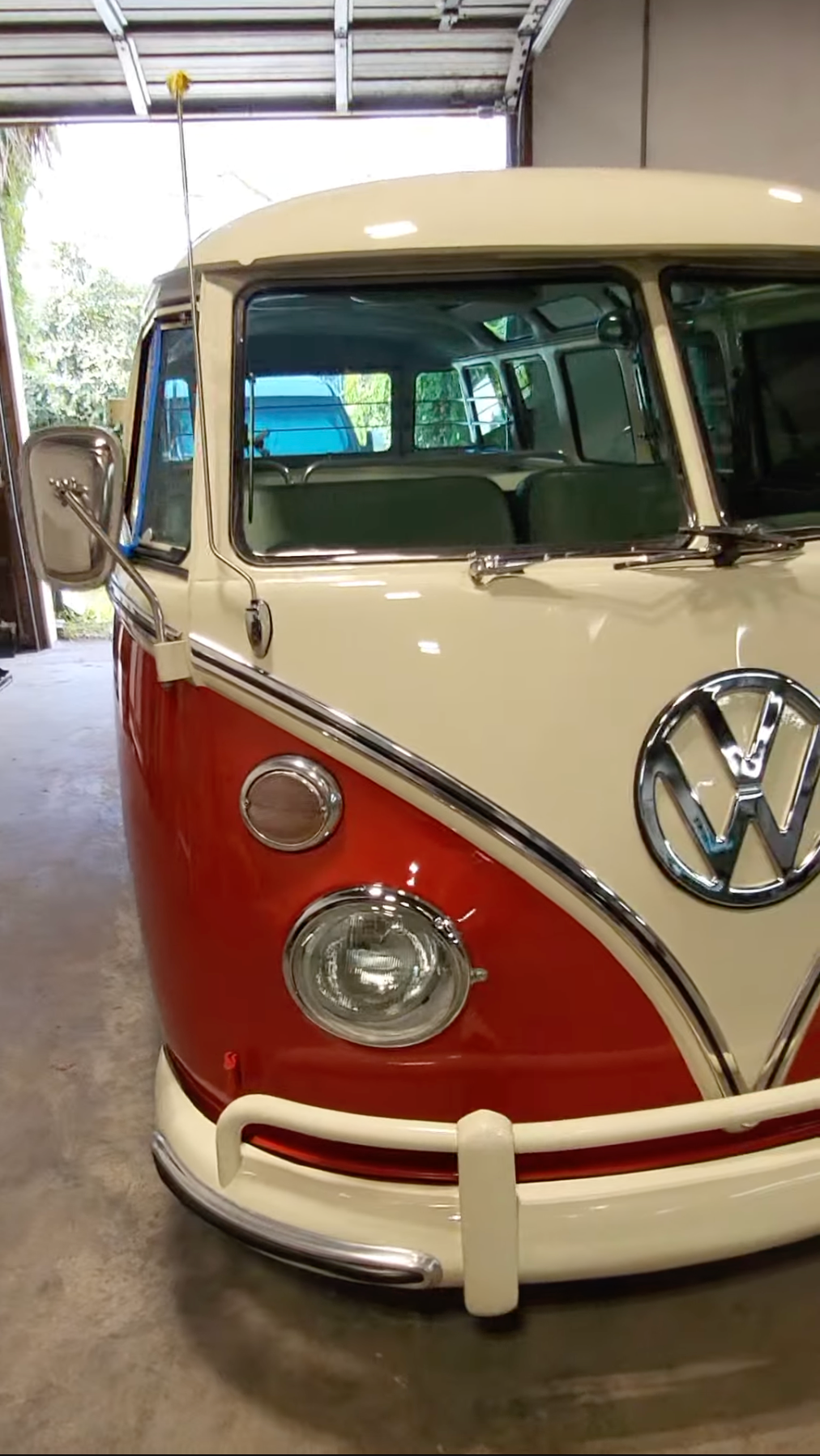
This is exactly what liquid PPF solves for a classic car owner. The NanoPro LPF goes on as a fluid and cures in place. There are no panels to remove. No seam lines. No visible edges where one piece of film ends and the next begins. The film follows the body lines of the vehicle. On a classic with compound curves, original chrome trim, and decades of preserved paint, that difference is significant.
I have worked on vehicles with original lacquer and enamel paint systems. Single-stage paint requires a different correction approach before the film goes on. In a single-stage system the color and the gloss live in the same layer. There is no separate clear coat. Correction applied incorrectly removes pigment that cannot be put back. I assess every classic individually. The film application is the same regardless of paint system. The preparation is what changes. And the preparation is where most people get it wrong.
RESTOMOD PROTECTION
Liquid PPF for Restomods
A restomod is a different problem than a classic or a daily driver. The owner has already invested in the build with modern mechanicals, fresh bodywork, new paint. The last thing that paint needs is a seam line running across the hood from conventional PPF film.
NanoPro LPF goes on as a liquid and cures in place. No panels to cut. No edges to tuck. No visible seam where the film ends on a fender or door. The paint the builder spent months perfecting looks exactly the way it was intended to look.
For a restomod with compound curves, custom body lines, or original sheet metal that took years to get right, seamless protection is not optional. It is the only protection that makes sense. Got a restomod? Let's talk.
WHAT PEOPLE SAY
Reviews
"Steve is a honest guy who goes out of his way to provide information and suggestions, to those of us who are new transplants to the area. He knows what he's talking about and he has a reputation for integrity and excellent work. I recommend his business wholeheartedly and I'm sure anyone who receives his services will be very happy with the detail work he provides. Highly recommend."
-Lorainne X. | 2021 Ferrari SF90 Stradale | Liquid PPF + Ceramic Coating | Tampa, FL
"Steve is the best around. He is extremely knowledgable and skilled at what he does. He came out to our house and we were able to actually watch him while he worked. He made our 2018 Acura seem like we just bought it brand new! We are very happy with the services he has provided!"
-Patricia Plaines | 2023 Porsche 911 | Paint Protection + Liquid PPF + Ceramic Coating | Tampa, FL
"Steve is a true professional and detailing enthusiast. He has many years of experience and is not just a weekend hobbyist trying to make some money on the side. He will answer any questions that you have and explain each step in detail if that's what you're looking for. I had him do a paint correction and ceramic coating on my truck and it looks better than when it left the factory..."
-Paul G. | 2023 Ford F-150 Raptor R | Paint Correction + Liquid PPF | Palm Harbor
FAQ'S
Frequently Asked Questions
What is liquid paint protection film?
It is a physical barrier applied to your paint in liquid form that cures into a solid protective film. It is not a coating. It is not a wax. It is a film that sits on the paint surface and absorbs damage so the paint underneath does not. Because it starts as a liquid it cures without seams, cut lines, or panel edges. The product I use is the NanoPro LPF, manufactured in Boynton Beach, Florida.
How is liquid PPF different from traditional PPF?
Traditional paint protection film is cut from pre-formed polyurethane sheets and installed panel by panel. Each panel creates a seam where it meets the next section of film. Liquid PPF is applied in fluid form and cures directly on the paint surface, so there are no panels, seams, or cut lines. Liquid PPF provides seamless protection across larger surfaces or the entire vehicle, which is often the preferred solution for classic and collector vehicles where visible film edges are not acceptable.
Does liquid PPF require paint correction first?
Yes. Liquid PPF bonds to the surface it is applied to. If the paint is not property corrected, the existing defects will remain in the paint after Liquid PPF is cured. Paint correction is always performed before liquid PPF application. There are no exceptions.
What areas does liquid PPF cover?
Standard coverage is the hood, front bumper, and front fenders. These are the surfaces that take the most impact from road debris and stone chips. Full vehicle application is available for owners who want seamless coverage across all panels. The right coverage area depends on the vehicle and the owner's goals.
Can liquid PPF be combined with ceramic coating?
Yes. When NanoPro Borograph ceramic coating is applied over properly cured NanoPro LPF, the installation achieves Permanent Status under the NanoPro system. The completed installation is registered on the vehicle's CARFAX report as part of its permanent history.
How long does liquid PPF last?
NanoPro LPF carries a 10-year manufacturer warranty. How long it actually holds up comes down to three things: correct surface preparation before application, correct application technique, and basic maintenance after. Applied over properly corrected paint by a certified installer, this product is built to last the full warranty period in Florida conditions.
Is every vehicle a candidate for liquid PPF?
No. Vehicles with active rust, peeling clear coat, or visual paint imperfections are not candidates until those issues are resolved. I assess every vehicle before any application and tell the owner honestly whether their vehicle qualifies. If it does not, I explain why and what the right service is instead.
Do you come to my location for liquid PPF application?
Yes. I come to you. No shop, no drop-off, no transport risk for your vehicle. Every service is performed at your location by appointment. I cover Pinellas County and Tampa Bay, and for classic and collector vehicles I will discuss travel within Florida.
WHERE I WORK
Service Area
I cover Pinellas County and the greater Tampa Bay area, including Clearwater, St. Petersburg, Palm Harbor, Tarpon Springs, and the surrounding areas. Services are performed at your location. You do not drop the vehicle off. You do not leave it somewhere and hope for the best. I show up, do the work, and you watch your vehicle the entire time if you want to. Watch me perform every step without hesitation.
For classic and collector vehicles outside this area, call and we can discuss travel within Florida.
GET STARTED
Is Your Vehicle
a Candidate for
Liquid PPF?
Steve Calafato | NanoPro Certified Expert | Pinellas County & Tampa Bay
TAP TO CALL | BY APPOINTMENT