Liquid Paint Protection Film for Restomods: The Invisible Solution Conventional PPF Cannot Deliver
You spent years and serious money building a restomod. Conventional PPF will leave a visible seam line across your hood. NanoPro LPF will not. That is the difference that matters.

Liquid paint protection film (liquid PPF) protects a restomod's fresh paint from stone chips and road debris without leaving a visible seam line across the hood or fenders. Unlike conventional PPF, which is cut from pre-formed polyurethane sheets and leaves a visible film edge, NanoPro LPF is applied in liquid form and cures directly on the paint surface. There are no cut lines, no panel seams, and no need to remove fenders or body trim during installation. Standard coverage of the hood and both front fenders takes approximately three hours and costs between $1,500 and $2,000.
What Is a Restomod?
A restomod is a restored and modified classic vehicle. The body and appearance stay true to the original. The mechanicals are brought up to modern standards. New engine, new transmission, new brakes, new suspension. The result is a classic that drives the way a classic never could from the factory.
It is also an expensive endeavor. By the time the build is finished, the owner has put serious money into every part of that vehicle. The paint is usually the last thing done and the first thing at risk the moment the car leaves the restoration shop.
That front end, hood, and fenders take the full impact of road debris from the first drive. Most restomod owners know this. Most do not have a good answer for it.
The Problem With Conventional PPF on a Restomod
Conventional paint protection film protects paint from stone chips. That part works. The problem is how it gets installed and what it leaves behind.
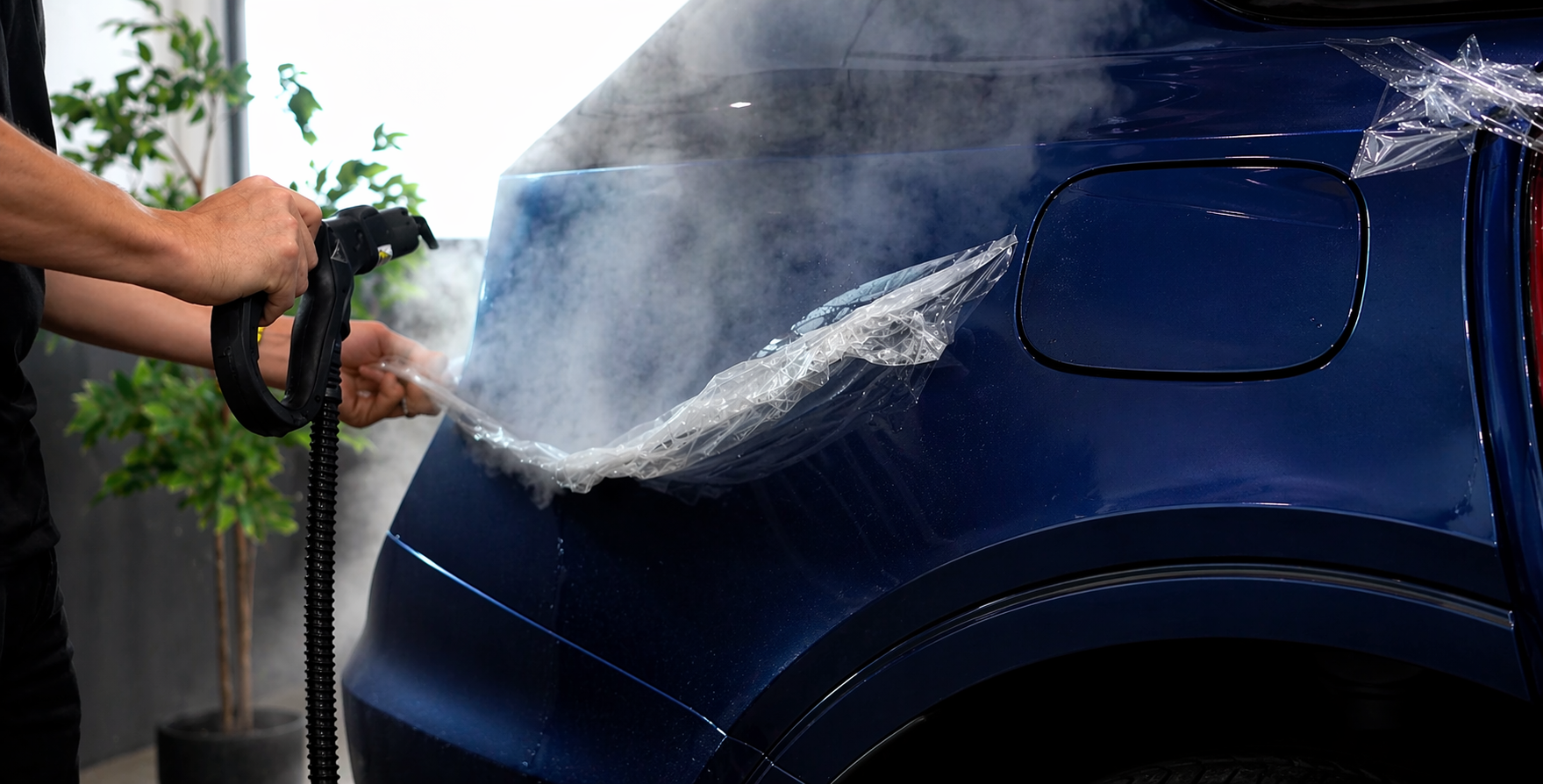
Conventional PPF is cut from pre-formed polyurethane sheets using a computer-controlled plotter. Each section is cut for a specific vehicle's body shape and then pressed into place on the panel. Where one section ends and another begins, a seam line is left on the surface. That seam line is visible. On most vehicles it runs across the hood.
On a daily driver, that trade-off is acceptable to most owners. On a restomod with fresh paint and bodywork that took months to get right, that seam line across the hood is not a trade-off. It is a problem.
There is also the resale question. A restomod with a visible PPF seam line across the hood raises questions for any future buyer. It signals something was done to the paint. It affects how the vehicle presents. It affects what it sells for.
The Coverage Problem at Edges and Emblems
The seam line is not the only issue. Conventional PPF cuts are sized for the flat areas of a panel. Near body corners, curved edges, and emblems, the film often does not reach full coverage. A gap remains at those edges. Road gravel hits those unprotected areas directly.
Front fenders with restomod emblems are a specific problem. The curved surface around an emblem is exactly where conventional PPF coverage tends to fall short. The emblem edges are exposed. The paint behind them is at risk.
What Some PPF Shops Do to Work Around This
To achieve full coverage with conventional PPF, some shops remove the front fenders, hood, or body trim entirely. They pull the panels off the vehicle, wrap the film around and behind the edges, and reinstall everything.
That means the screws, fasteners, and clips that hold those body parts in place are disturbed. The structural integrity of the body assembly is compromised. Front-end rattles and new noises after a conventional PPF install are not unusual. For a restomod owner who just had every body panel aligned and fitted correctly, that is not an acceptable outcome.
After a complete restomod restoration, dismantling the vehicle for conventional PPF installation is not worth the risk. The paint protection is not worth what it costs the build.
What NanoPro LPF Does Differently
NanoPro LPF is a liquid polyurethane and acrylic blend that is applied directly to the prepared paint surface and cures into a solid protective film. Because it starts as a liquid, it follows the shape of the vehicle naturally. It covers body corners and curved edges completely. It reaches around emblems. It does not leave a seam line.
There are no pre-cut panels. There is no plotter. There is no film being pressed into place and trimmed. The product is applied in liquid form, self-levels across the panel, and cures in place. The result is continuous coverage across every treated area with no visible edges and no seam lines anywhere on the vehicle.
Nothing is removed from the vehicle during installation. The hood stays on. The fenders stay on. Every fastener, screw, and trim piece remains exactly where it was when the car arrived. The structural integrity of the build is not touched.
| FACTOR | NANOPRO LPF® | CONVENTIONAL PPF |
|---|---|---|
| Visible seam line | None. No cut lines anywhere on treated areas. | Yes. Visible seam lin, typically across the hood. |
| Edge and corner coverage | Complete. Applied liquid conforms to every curve. | Gaps at body corners and curved edges are common. |
| Panel removal required | No. Nothing is dismantled. | Sometimes required for full coverage. Fasteners disturbed. |
| Installation time | Approximately 3 hours for hood and both front fenders. | 3 to 4 days of labor at a shop. |
| Location of service | Performed at your location. No shop drop-off. | Shop drop-off required. Arrange transport twice. |
| Cost (hood + front fenders) | $1,500 to $2,000. | $2,000 to $3,000, often more for full coverage. |
| Protection level | Absorbs and deflects stone strikes and road debris | Absorbs and deflects stone strikes and road debris |
| Warranty | 10-year manufacturer warranty when NanoPro LPF is combined with NanoPro Borograph ceramic coating. The completed installation achieves Permanent Status and is registered on the vehicle's CARFAX report. | Varies by installer and product. Not always verifiable. |
The protection level is comparable. The installation process and the seam lines conventional PPF leaves behind are not. For a restomod, that difference matters.
What the Installation Looks Like
Before NanoPro LPF is applied, the paint is assessed for condition. I check paint thickness across the panels, evaluate the clear coat, and look at the overall paint system. Not every vehicle qualifies for liquid PPF at the time of inspection. If yours does not, I tell you directly and explain exactly why.
Paint correction comes first. Every time. No exceptions. NanoPro LPF is transparent and cures directly over whatever is in the paint surface. Any swirl marks, oxidation, or scratches left in the paint will remain visible after the film cures. The paint is corrected and polished before the film is applied.
After correction, the surface is chemically decontaminated and fully wiped down. Any residue left on the surface can interfere with how the film bonds and levels. That step does not get rushed.
Once the surface is fully prepared, NanoPro LPF is applied to the panel and worked across the paint. The product self-levels as it spreads. Standard high-impact area coverage includes the hood, front bumper, and both front fenders. The whole process takes approximately three hours on a properly prepared vehicle.
The service is performed at your location. The vehicle does not leave your property. You can watch every step of the work.
The Warranty and What It Covers
When NanoPro LPF is combined with NanoPro Borograph ceramic coating, the completed installation achieves Permanent Status under the NanoPro system and qualifies for a 10-year manufacturer warranty. That installation is registered on the vehicle's CARFAX report and stays with the vehicle permanently.
For a restomod, that documentation is part of the value of the protection. A future buyer can look at that vehicle's CARFAX report and see exactly what was done, what products were used, who performed the work, and when. That record does not disappear.
Who This Is For
NanoPro LPF is the right answer for a restomod owner who wants front-end paint protection without a visible seam line, without panel disassembly, and without leaving their vehicle at a shop for three or four days. If the appearance of the build matters to you, and if the paint is something you spent real money on, liquid PPF is the protection that fits what you built.
It is not the right answer for every vehicle. If there is active rust, failing clear coat, or significant paint damage, those issues need to be resolved before any film goes on the surface. I assess every vehicle before any application and I am direct about what I find.
Frequently Asked Questions
Does liquid PPF leave a seam line on a restomod?
No. NanoPro LPF is applied in liquid form and cures directly on the paint surface. There are no pre-cut film sections, no panel transitions, and no visible edges within the treated area. A restomod with NanoPro LPF on the hood and front fenders has no visible evidence of film on those surfaces.
Do you have to remove the fenders or hood to apply liquid PPF?
No. Nothing is removed from the vehicle. The hood, fenders, trim, and emblems all stay in place. The film is applied in liquid form and covers corners and curved edges without disassembly. The structural integrity of the build is not touched during installation.
How does the cost of liquid PPF compare to conventional PPF?
NanoPro LPF for the hood and both front fenders costs between $1,500 and $2,000. Conventional PPF for the same coverage typically ranges from $2,000 to $3,000, and can go higher when full disassembly is involved. Liquid PPF costs less, takes less time, and leaves no visible seam line.
Does liquid PPF provide the same protection as conventional PPF?
Yes. Both products protect paint from stone chips and road debris. The protection level is comparable. The difference is in the installation method and what is left visible on the vehicle. Liquid PPF provides seamless coverage with no visible film edges. Conventional PPF leaves seam lines where film sections meet and gaps at curved edges and corners.
How long does the installation take?
Approximately three hours for the hood and both front fenders on a properly prepared vehicle. That does not include the paint correction that precedes the film application. Service is performed at your location. There is no shop drop-off and no transport risk for your vehicle.
Does liquid PPF come with a warranty?
When NanoPro LPF is combined with NanoPro Borograph ceramic coating, the completed installation achieves Permanent Status under the NanoPro system and qualifies for a 10-year manufacturer warranty. That installation is registered on the vehicle's CARFAX report and stays with the vehicle permanently.
From the Installer:
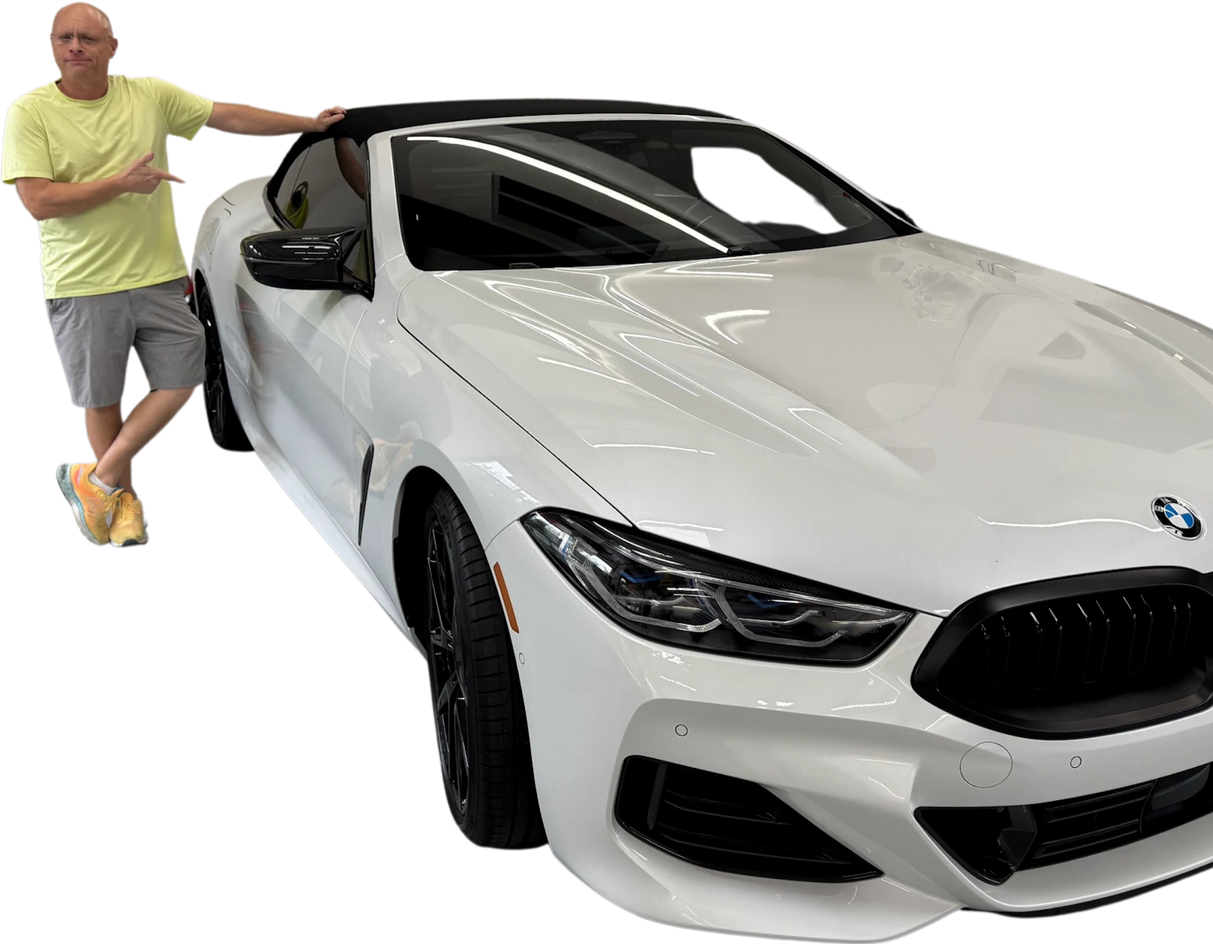
I'm Steve Calafato, NanoPro Certified Expert and owner of Resurrection Auto Detailing LLC in Tarpon Springs, Florida. I specialize in ceramic coating, paint correction, and liquid paint protection film for classic, collector, restomod, and performance vehicles throughout Pinellas County and Tampa Bay. Every service is performed by me, personally, at your location.
Share
GET STARTED
Your Vehicle
Your Location
My Standards
Paint correction. NanoPro LPF. NanoPro Borograph ceramic coating.
Steve Calafato | NanoPro Certified Expert | Pinellas County & Tampa Bay
TAP TO CALL | BY APPOINTMENT